What Is a Towel Ladder and What Types Are Available?
A towel ladder is a vertical or leaning rack with horizontal bars for hanging towels. Its open shape keeps fabric visible and can help towels dry between uses, provided they have enough space around them. Towel Ladders come in several forms, from lightweight freestanding designs to wall-mounted models that stay in place. Some are heated, adding warmth as well as a place to hang towels. The right option depends on your bathroom layout, available wall space, and daily routine.
A leaning ladder can add storage without drilling, but it needs a stable floor and a suitable wall. Wall-mounted versions save floor space, though their fixings must match the wall and the expected load. Freestanding ladders are easier to move, while heated models may need extra planning for installation and power. Materials matter, too: wood brings a softer look, while metal is often easier to wipe clean. These are useful differences, but the word “ladder” can make every model sound equally steady. They are not. Check dimensions, rung spacing, weight guidance, and installation instructions before choosing. A wide towel folded over a narrow rung may slip, which is easy to overlook in product photos. Small detail. This guide explores the main towel ladder types, their practical strengths, and the trade-offs worth considering before one earns a place beside your shower.
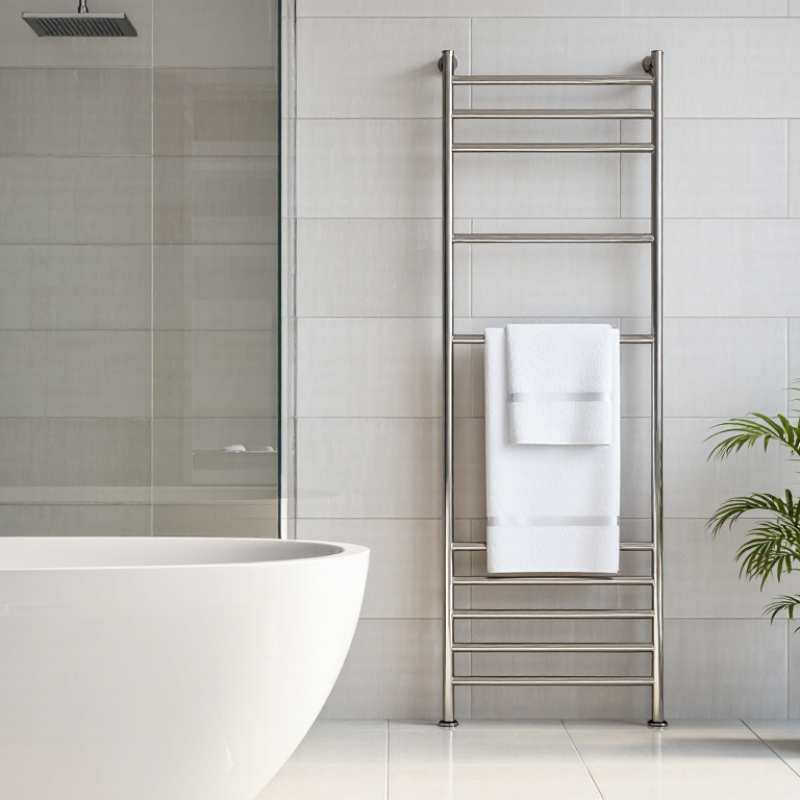
What a Towel Ladder Is and How It Works
A towel ladder is a rack shaped like a narrow ladder, with horizontal bars for hanging towels. It can lean against a wall or attach directly to one. Freestanding models are easy to move, while wall-mounted ones need secure fixings. The bars keep towels separated, allowing air to circulate better than when towels are folded over a crowded hook. They do not dry towels instantly, though. A thick towel in a humid bathroom may stay damp for hours.
Tips: Spread towels across separate rungs instead of doubling them over. Leave a little space around the ladder, and check that a leaning model sits firmly on the floor. For wall-mounted versions, use fixings suited to the wall material. Small details matter.
In daily use, you lift a towel over a rung and let its weight hold it in place. Lower rungs are handy for larger bath towels; upper ones can hold hand towels or lighter items. Some ladders are heated, but ordinary towel ladders simply provide hanging space. I find the open design useful in tight bathrooms, yet it can look cluttered when every rung is full. That is a trade-off worth considering. A ladder also needs enough clearance from doors and walkways, especially in a small room.
| Type or Feature | Structure | How It Works | Typical Use and Considerations |
|---|---|---|---|
| Basic towel ladder | A narrow frame with two upright sides joined by several horizontal rungs. | Towels are draped over the rungs, allowing air to circulate around the fabric as it dries. | Offers several hanging levels while using relatively little floor or wall space. Drying speed depends on airflow, humidity, and how towels are spread out. |
| Freestanding ladder | A self-supporting frame, often with feet or a base; some models lean against a wall for stability. | Stands on the floor and holds towels on its rungs without requiring permanent wall fixings. | Can be moved when needed. Check that it is stable, has a suitable footprint, and is placed where it will not obstruct doors or walkways. |
| Wall-mounted ladder | A ladder-style rack fixed directly to a wall, with horizontal bars or rungs. | Wall brackets support the frame while towels hang from the rungs. | Keeps floor space clear. Fixings should suit the wall material and the rack’s intended load; installation instructions should be followed. |
| Leaning decorative ladder | A ladder-shaped rack designed to rest at an angle against a wall, usually with open rungs. | Towels are hung over the rungs; the wall supports the upper part of the frame. | Often chosen for its simple appearance and portability. Use it on a stable, non-slip surface and secure it if the manufacturer recommends wall attachment. |
| Heated ladder-style towel rail | A fixed or freestanding ladder-shaped rail with heated bars; models may be electric or connected to a central heating system. | Warm bars heat towels by contact and can help them dry. Electric and hydronic models use different heat sources and installation requirements. | Provides warmth as well as a place to hang towels. Check energy requirements, bathroom electrical-safety rules, and whether the unit is intended for towel warming or room heating. |
| Common frame materials | Common options include wood, stainless steel, aluminum, and coated metal. | The material forms the uprights and rungs; its finish affects appearance and care requirements. | For humid rooms, select a material and finish suitable for bathroom conditions, and follow the care guidance to help limit moisture damage or corrosion. |
| Choosing a suitable ladder | Options vary in height, width, rung spacing, capacity, mounting style, and material. | The frame provides separate hanging points so towels can be spread across the rungs rather than piled together. | Measure the available space, consider the number and size of towels, and check the product’s load limits and installation requirements before buying. |