Top Ceramic Rod Manufacturers and Suppliers for Global Buyers
Choosing the right Ceramic Rod manufacturer requires more than comparing prices and product photos. Global buyers need dependable materials, stable dimensions, and clear technical documentation. A supplier may offer alumina, zirconia, silicon nitride, or other ceramic compositions. Each option performs differently under heat, friction, electrical stress, and chemical exposure.
This guide introduces leading Ceramic Rod manufacturers and suppliers serving international markets. It examines material grades, diameter tolerance, surface finish, custom machining, packaging, and export experience. These details matter. A rod used in a furnace assembly may need excellent thermal stability, while an electrical insulator requires consistent dielectric performance. Buyers should also review inspection reports, sample policies, production capacity, and communication quality before placing large orders.
Experience reveals small problems early. Poor packaging can cause edge chipping during transport. Inconsistent grinding may affect assembly accuracy. These risks are easy to overlook. Reliable suppliers explain their testing methods and state their limitations clearly. Certifications can support trust, but they should not replace independent verification or practical sampling. No supplier fits every application. That is worth remembering.
The manufacturers discussed here are evaluated from a professional purchasing perspective. Their capabilities, quality controls, customization services, and international support will help readers create a more practical shortlist. Some information may change as factories update equipment or product ranges. Therefore, buyers should confirm current specifications directly and request written quotations before making a final decision.
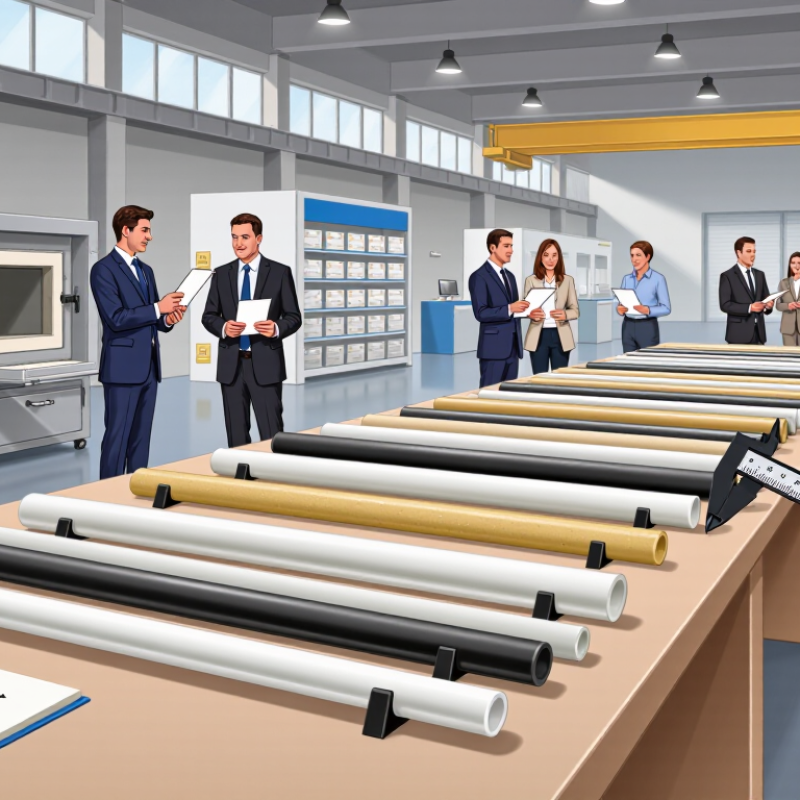
Ceramic Rods: Types, Properties, and Industrial Applications
Ceramic rods are engineered for demanding environments where metals may soften, corrode, or conduct electricity. Alumina rods offer strong insulation and wear resistance. Zirconia provides higher fracture toughness and a smoother surface. Silicon nitride tolerates thermal shock, while steatite remains economical for electrical components. Each type behaves differently under heat, load, and chemical exposure.
According to Grand View Research, the global advanced ceramics market was valued at approximately USD 84.6 billion in 2023, with growth expected through 2030. This expansion reflects demand from electronics, energy, medical equipment, and industrial processing. Ceramic rods commonly support heating elements, thermocouples, furnace fixtures, wire guides, pump parts, and high-voltage assemblies. Their low electrical conductivity and stable dimensions are valuable in controlled production lines.
A practical warning: hardness is not toughness. A highly wear-resistant alumina rod can still crack from sudden impact or uneven heating. Diameter tolerance, surface finish, porosity, and thermal expansion deserve careful review. ISO 2768-based dimensional checks can improve purchasing consistency, but they do not replace application testing. The trade-off is easy to miss. Global buyers should request material certificates, firing data, temperature limits, and batch inspection records. Reported properties may vary between laboratories, and catalog values can look cleaner than real factory conditions. Engineering judgment remains necessary.
Top Ceramic Rod Manufacturers and Suppliers for Global Buyers - Ceramic Rods: Types, Properties, and Industrial Applications
| Ceramic Rod Type | Typical Composition or Grade | Density (g/cm³) | Typical Continuous Service Temperature (°C) | Thermal Conductivity (W/m·K) | Key Properties | Common Industrial Applications | Important Buying Checks |
|---|---|---|---|---|---|---|---|
| Alumina | Al₂O₃, commonly 90–99.8% purity | 3.6–3.9 | 1,500–1,800 | 18–35 | High hardness, strong electrical insulation, good wear resistance, corrosion resistance, and dimensional stability. | Electrical insulators, furnace supports, thermocouple protection tubes, wear guides, laboratory fixtures, and semiconductor equipment. | Confirm alumina purity, open porosity, diameter tolerance, straightness, surface roughness, and metallization requirements. |
| Zirconia | Partially stabilized or fully stabilized ZrO₂; yttria-stabilized grades are common | 5.7–6.1 | 1,000–1,500 | 2–3 | Very high fracture toughness for a technical ceramic, excellent wear resistance, low thermal conductivity, and chemical stability. | Precision shafts, grinding and dispensing components, wire guides, medical and dental components, and high-wear tooling. | Specify stabilizer type, phase composition, toughness, hardness, dimensional tolerance, and resistance to thermal shock. |
| Silicon Nitride | Si₃N₄; reaction-bonded, sintered, or hot-pressed grades | 3.1–3.3 | 1,000–1,400 | 15–35 | High strength-to-weight ratio, excellent thermal-shock resistance, low density, and strong resistance to molten metals and wear. | Automotive and industrial bearings, molten-metal handling parts, welding fixtures, burner components, and high-temperature supports. | Review grade-specific flexural strength, fracture toughness, oxidation behavior, machining limits, and dimensional stability. |
| Fused Silica / Quartz | Amorphous SiO₂, generally above 99.5% silica | About 2.2 | 1,000–1,100 for continuous use; higher short-term exposure may be possible | About 1.4 | Extremely low thermal expansion, high thermal-shock resistance, optical transparency in selected grades, and good chemical purity. | Semiconductor processing, laboratory tubes, optical and UV equipment, glassworking, furnace assemblies, and analytical instruments. | Check hydroxyl content, optical transmission, bubble and inclusion limits, purity, surface finish, and compatibility with alkalis. |
| Mullite | Al₂O₃–SiO₂ ceramic, commonly containing approximately 60–80% Al₂O₃ | 2.8–3.2 | 1,400–1,600 | 3–6 | Low thermal expansion, good thermal-shock resistance, high-temperature stability, and useful electrical insulation. | Kiln furniture, furnace tubes, heater supports, thermocouple assemblies, and high-temperature laboratory equipment. | Compare alumina-to-silica ratio, porosity, thermal expansion, firing atmosphere, and maximum supported load. |
| Cordierite | Mg₂Al₄Si₅O₁₈-based ceramic | 2.1–2.5 | 1,000–1,300 | 1.5–3 | Very low thermal expansion, low density, good thermal-shock resistance, and moderate electrical insulation. | Catalyst-support structures, kiln furniture, burner parts, heat exchangers, and thermal-cycle fixtures. | Verify thermal expansion, porosity, mechanical strength at temperature, chemical compatibility, and wall-thickness tolerance. |
| Steatite | MgSiO₃-based ceramic, often selected for electrical applications | 2.6–2.9 | 1,000–1,200 | 2–4 | Good electrical insulation, low dielectric loss at suitable frequencies, economical processing, and moderate mechanical strength. | Terminal blocks, coil forms, resistor supports, high-frequency insulators, and appliance components. | Confirm dielectric strength, dielectric loss, water absorption, dimensional accuracy, glaze compatibility, and operating frequency. |